
From concept to new chancery: the story behind the Vilnius embassy relocation
A look behind the scenes at how technology, security and human-centred design came together in a unique relocation
How do you relocate an entire chancery? What happens from the moment the old premises start to feel cramped to the festive opening of a new building? For the staff of the Housing and Real Estate Worldwide Department (DHF), this project in Vilnius is an inspiring example of how you can forge ahead through smart choices, teamwork and creative solutions.
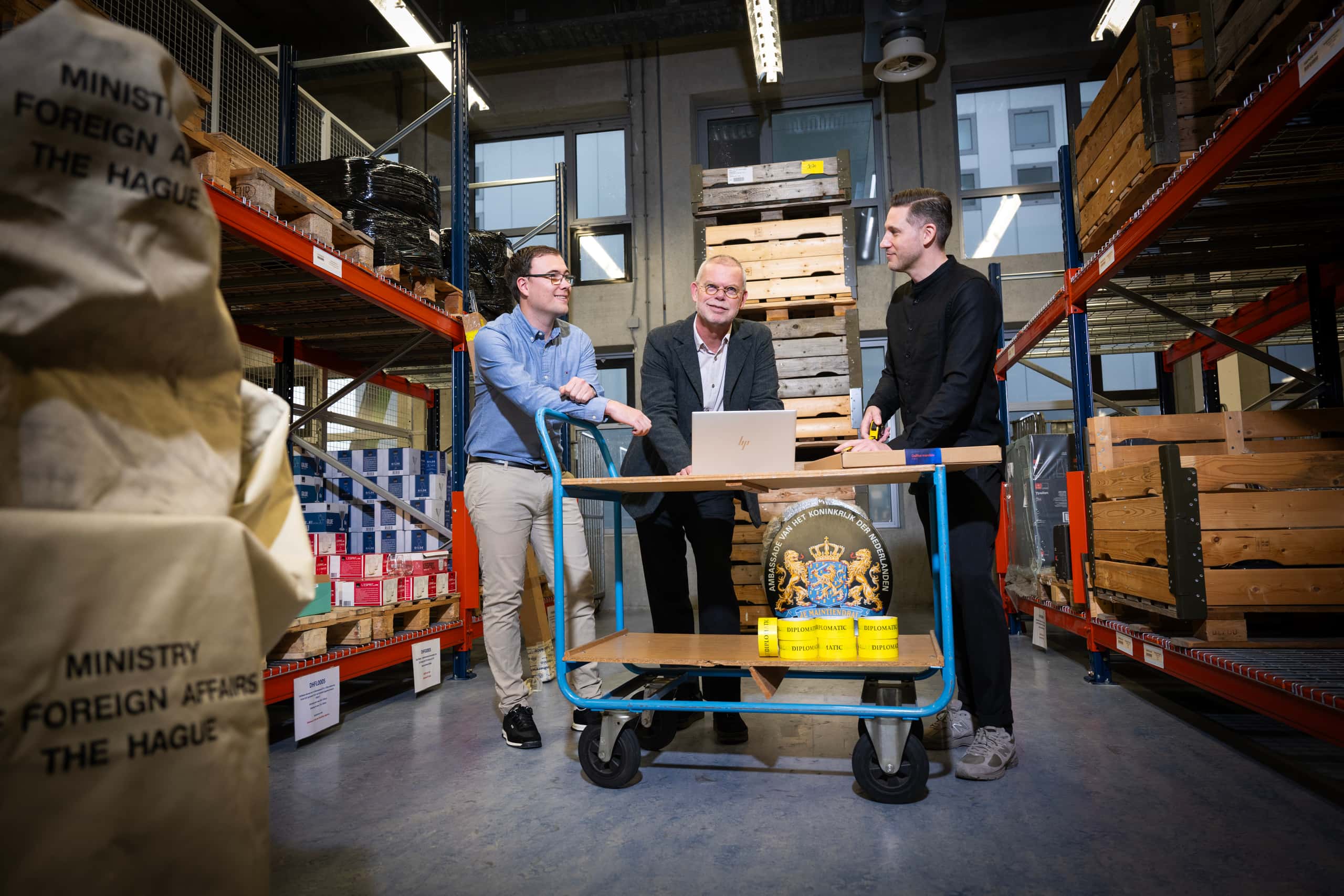
Regional coordinator Arno Daamen oversaw the process from beginning to end. That was unusual, but it made the experience all the more instructive: the project is a shining example of how DHF contributes to future-proof, secure and sustainable accommodation worldwide. What went on behind the scenes, who was involved and why did this particular trajectory take two years to complete? We got together with Arno, interior designer Sander Haan and security adviser Ton Brok to look back at a remarkable project.
An expanding embassy and a pressing challenge
The reason for the relocation in Vilnius was clear: rising geopolitical tensions on Europe’s eastern flank had led to the arrival of extra staff – some seconded from other ministries – so the premises were getting too small. What’s more, tighter information security measures meant local employees could no longer work from home, so the embassy needed to have enough work stations for everyone. ‘Things just couldn’t go on as they were. Something had to be done,’ Arno tells us.
As regional coordinator, his job is to get the ball rolling by picking up signals, identifying issues and determining which solutions are realistic. At least, that’s how it goes normally. But this time it was different. The role of project manager happened to be vacant for a long period, so Arno ended up in charge of the entire trajectory, from business case to completion. ‘That’s really unusual,’ he tells us. ‘But thanks to a strong local partner and clear deadlines, the whole process went very smoothly.’

Beeld: © BZ / Josje Deekens
Arno Daamen, regional coordinator at DHF
‘The complexity isn’t visible, but every wall hides a wealth of technical ingenuity, customised solutions and teamwork.’ - Arno Daamen
From problem to plan: relocation starts with a strong business case
Every relocation starts with a basic question: what are our real needs? Arno: ‘We typically allow two years for a complete relocation. It starts with a careful analysis of what the mission does, and what functional spaces it needs for those purposes.’ The business case compares potential locations, assesses them against the housing criteria – sustainable, efficient, secure and fit for the future – and determines which option best meets current needs as well as those of the next fifteen years.
In Vilnius, extending the old chancery would have been possible but costly. A new, sustainable office building two streets away proved not only more practical, but also more financially attractive: lower rent meant the investment would be recouped in ten years. ‘That option immediately gained broad support. It was both smart and future-proof,’ Arno explains. The next step was the design phase, when architectural drawings are made and every aspect is considered, from functionality and security to routing, workspaces and of course general appeal. Sander Haan played a central role in this. ‘He brought creative flair to the practical plans.’

Beeld: © BZ / Josje Deekens
Sander Haan, interior designer at DHF
Human-centred design: from social hub to hybrid workspaces
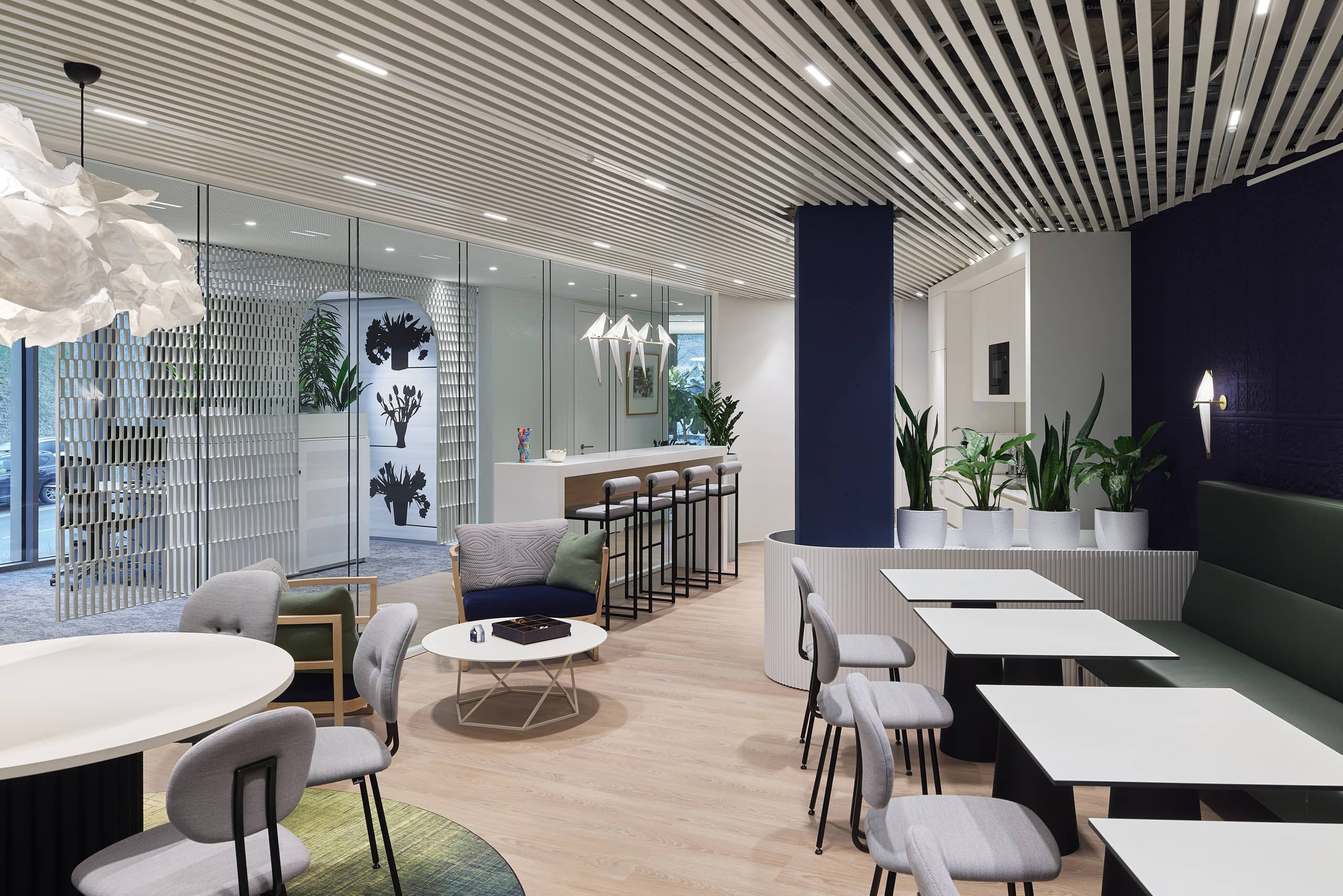
‘An embassy is much more than an office. It’s a meeting place, hospitality space and workspace combined,’ Sander says. So he designed spaces that would enhance both collaboration and concentration. The thing he’s most proud of is the social hub: a strategically located kitchen in the bend of the U-shaped office. ‘That’s become a favourite spot for meeting one another. You constantly walk past it, which makes contact very organic,’ Sander explains.
The hybrid working pattern was also revised. Previously, the assumption was that missions only needed workspace for a 70% in-office attendance rate, but in practice that turned out not to provide enough flexibility in the event of expansion. In a conscious change to policy, DHF now provides a buffer to cover possible future needs. It means that everyone always has access to a workspace, even though no one has their own designated desk. The Toonkamer – the reception room – is no longer reserved for the ambassador, but a space that every member of staff can use to receive visitors.
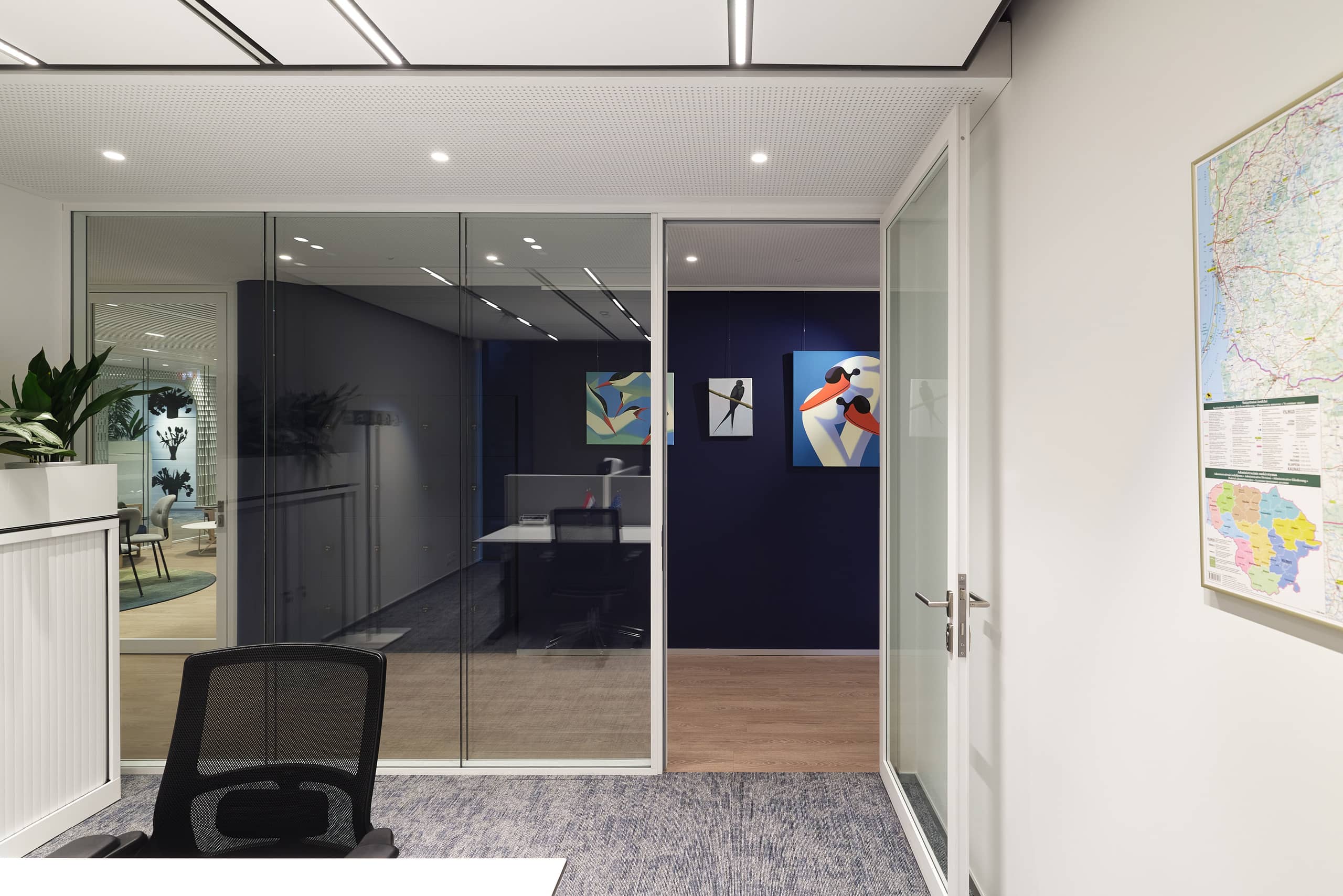
The new embassy cleverly combines privacy with openness. For instance, an open office area was screened off with a 3D-printed partition made of recycled PET bottles. ‘It creates a calm space without having to put up walls. Sustainable, circular and practical,’ Sander sums up.

Beeld: © BZ / Josje Deekens
Ton Brok, security adviser at DHF
‘An embassy should be a pleasant place to work, but above all be secure.’ - Ton Brok
Invisible security layers
‘An embassy should be a pleasant place to work, but above all be secure,’ security adviser Ton Brok adds. Ton played a key role in this regard. ‘We receive a threat assessment for every city in which there’s a Dutch mission. That’s my basis for deciding which security measures are necessary and appropriate. My role in the team involves making sure that these measures are correctly incorporated in all subsequent versions of the design and delivered in accordance with existing standards.’
Sander and Ton worked closely together to find the right balance between user-friendliness and security. At times this called for creative solutions: moving doors to be inside the secure zone, modifying routing or making sure a meeting room was equipped for the possible secondment of more Defence staff.
‘Security requirements determine the contours of a building’s structure; interior design determines its feel. You need them both,’ Arno explains. The result is an office that feels bright, functional and open – despite the many invisible security layers.
Sustainability also played a role: the building itself was designed to meet BREEAM Excellent certification (the gold standard for sustainable construction and property management). ‘A perfect example of our “Walk our Talk” aspirations,’ Arno concludes.
An embassy that ticks all the boxes – and a project to be proud of
The relocation means that the Dutch embassy in Vilnius is now ready for the next 15 years: it’s sustainable, secure, functional and future-proof. But above all, it’s a place where staff can work pleasantly, meet one another and receive guests in a professional setting. ‘It makes me incredibly proud,’ Arno says. ‘Because it’s the result of close teamwork.’
And that result is more than the sum of the skill sets of the people involved, like interior designer Sander, security adviser Ton and their colleagues responsible for building systems, art and logistical support. Thanks to close, professional teamwork, this project was completed on schedule and within budget – and the finished product is both appealing and functional.
Collaboration was crucial to this success – both within DHF and with the embassy. The staff there provided input and feedback during the design phase, and offered practical support during the implementation phase.
This project shows how impactful our role is as operational management: through smart choices, professional skill and teamwork we make a difference worldwide.

Beeld: © BZ / Norbert Tukaj
The embassy in Vilnius